

Your dog has been going back to the same spot on her flank since Sunday. You have watched her return to it four times during one television program.
Here is the line up front, because it is the useful part. A bath can calm skin down, get the allergens and dead coat off, and stop a lot of the scratching for a while. It cannot tell you why the skin is angry in the first place. Those are two different jobs, and if you only do the first one you can lose a couple of weeks.
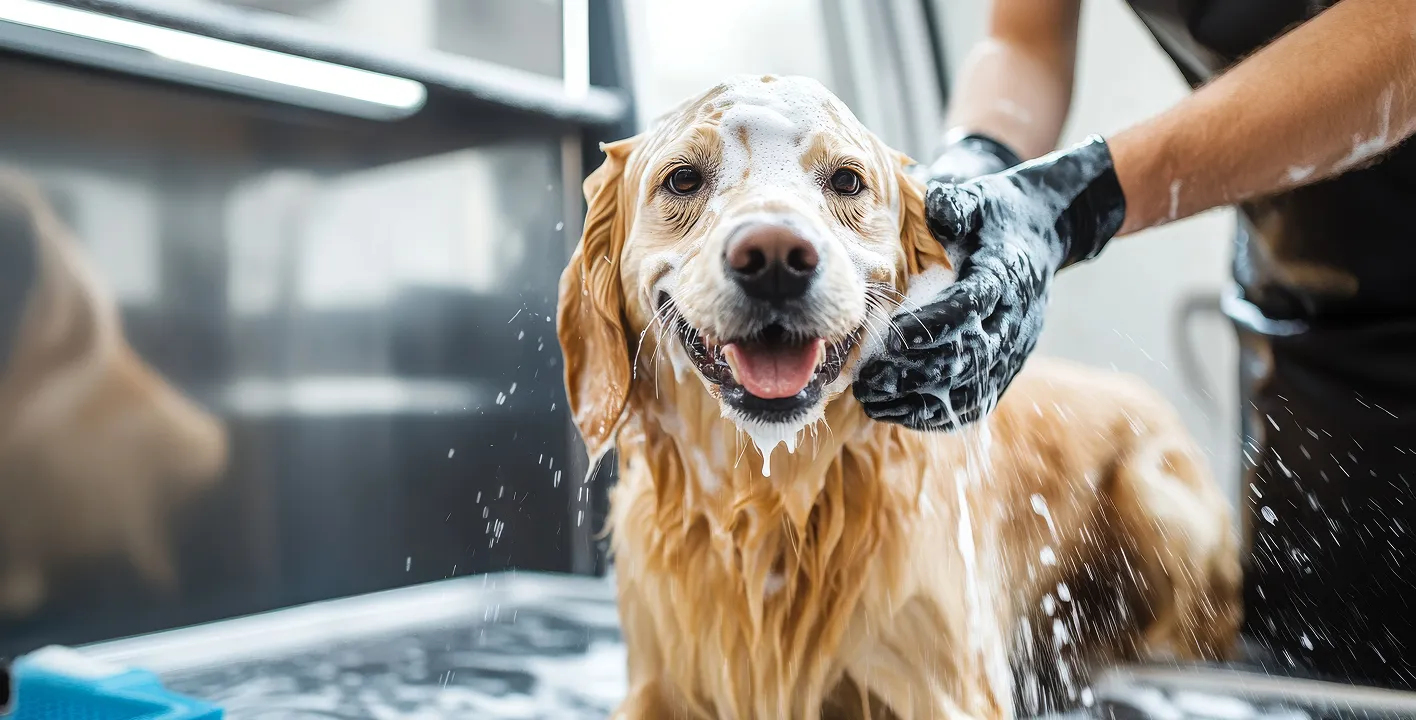
What does a bath actually fix?
More than people expect.
Most Dallas itching in spring and autumn is contact based. Pollen, grass, dust and dander sit in the coat, and the dog carries them around and reacts to them all day. Washing that off is not cosmetic. It is removing the thing causing the reaction.
A proper bath also strips out dead undercoat, which traps damp against skin and makes everything worse. Every bath includes the wash, a full blow out, nails and ear cleaning, and here the blow out is the part that matters most. A thick coat left to dry on its own is how yeast gets comfortable.
Flaky skin often improves too, because a good deal of what looks like dry skin is coat that has not been washed in three months and is holding on to everything that landed on it.
What does a groom not fix?
Anything with a cause under the skin.
Food allergies. Environmental allergies that need medication. Mange. Fungal infection. Thyroid trouble. A bacterial infection in a hot spot that has been running for days. A bath makes some of those look better for two days, and none of them go away.
Your groomer is not a vet and will not pretend to be one. What she will do is tell you exactly what she found and where, because she has just had her hands over every inch of your dog. That is genuinely useful information to walk into a vet appointment holding.
What is a hot spot, and why did it appear overnight?
Because more or less it did.
A hot spot is a patch of skin the dog has licked or chewed until the surface breaks, and then bacteria get into it and it spreads fast. It is wet, red, warm to the touch and it usually smells slightly off. A dog can turn a small itch into a palm sized hot spot in an afternoon.
Once it is open, it is a vet problem, not a bath. Water on raw skin stings, and a hot spot needs cleaning, usually something topical and often a course of tablets. If we pull up and find one, we will show you and talk about how to do the rest of the groom around it rather than washing straight over it.
When should I call the vet instead of the groomer?
Plainly, with no hedging, because this is the part people sit on too long.
Call the vet if the skin is raw, broken or weeping. If there is a bad smell coming from the ears, or dark gunk in them, or she is shaking her head and holding it tilted. If a patch is visibly bigger than it was yesterday. If hair is coming out in a defined circle. If she has stopped sleeping through the night. If she is chewing her feet until they are wet and stained.
Any of that is a vet visit first and a groom afterward. The groom works better after the medicine anyway.
If the itching came along with black specks in the coat, start with Found Fleas on Your Dog? The First 48 Hours instead, because one flea allergic dog can look exactly like a skin condition.
Why does Dallas make this worse?
Because we barely get a break in the year.
Sound like your dog? We bring the van to your driveway. No cages, no car rides, same groomer every time.
BOOK A GROOMCedar in winter, oak and grass through spring, ragweed in autumn, and humid heat in between that keeps a thick coat damp long after a walk. Dogs in North Dallas and Lake Highlands are out on the same grass all year round, and a lot of what looks like a sudden skin problem is a slow build that finally crossed a line.
Ears are the same story. Warm and damp is the whole recipe, and floppy eared dogs pay for it first. Dog Ear, Teeth and Nail Care goes through what to watch for between visits.
What can I do between grooms?
Rinse her off after the park with plain water, no soap, and dry her properly afterward. That alone takes a surprising amount out of a coat.
Keep a rhythm instead of waiting for the smell. Smooth coats do well on a bath every 8 to 12 weeks. Standard and curly coats want every 4 to 6. Itchy dogs usually belong at the shorter end of whichever band they are in.
Wipe her feet when she comes inside. Feet are how the grass allergens ride into the house, and feet are where the chewing usually starts.
And keep notes. When it started, what was in bloom, what she ate, which leg. A vet can do a lot with that. So can whoever grooms her next.