

What does lake water actually do to a coat?
He went in happy, swam for twenty minutes, shook twice and got in the car pleased with himself. Two days later there's a firm ridge of coat behind his front legs that wasn't there on Wednesday.
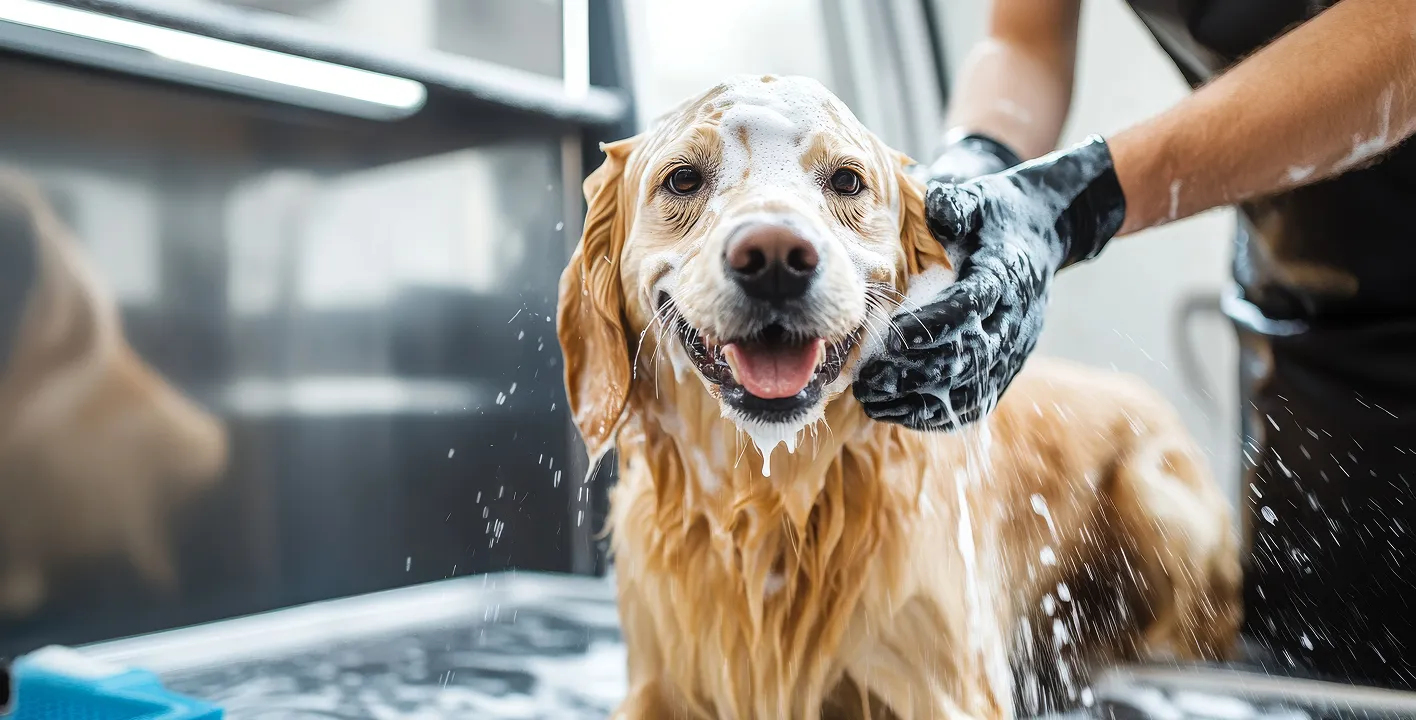
It isn't the water that does it. It's what the water carries and what it leaves behind. White Rock is the busiest dog water in the city, and it's lake water, which means silt, fine sediment and organic matter. All of that goes into the coat along with the water. When he shakes and the surface dries, the fine stuff stays down at the skin in the undercoat, where sun and breeze never reach.
Now you've got a coat that's gritty at the base and damp underneath while the top feels dry to your hand. Grit makes hair grab hair. Damp keeps it soft enough to wind. Warm speeds the whole thing up, and in a summer that runs May into October, warm is a given.
Why 48 hours?
Because that's roughly how long it takes for winding to become a mat you can't comb out.
On the first day the coat is tangled, and tangles come out. A comb goes in at the skin, works from the ends back, and the hair separates. By the second day those tangles have tightened against each other and against the skin, and the undercoat has felted in around them. Now the comb won't pass, and getting through it means pulling on skin.
That's the window. Inside about 48 hours, a swim costs you a rinse and a dry. Past it, you're often looking at cutting rather than combing, and how short depends entirely on how deep it went.
He looks fine, is he fine?
Check with your fingers, because a coat will lie to your eyes. The most common thing we hear standing in a driveway in Lakewood is that the dog looked completely fine yesterday.
Part the hair down to the skin in six places. Behind the ears. Under the collar. The armpits. The chest. The back of the thighs. The base of the tail. Slide a comb in at the skin and draw it outward. If it moves freely, you're fine. If it stops, or if the coat and the skin move together like one sheet, that's a mat forming, and it's been forming since the swim.
What if I already missed the window?
Then you deal with what's there, and no, you haven't ruined your dog.
If there are a few small mats, they can often still come out, and a proper bath and force dry does more of that than people expect, because the dryer separates the undercoat from the inside out. If the matting is widespread or tight to the skin, the honest answer is that the coat comes off underneath it. Combing a felted coat off a dog is minutes of pain per mat, and the result is worse than a clean short cut.
Under a big mat the skin has had no air for a while. It's often pale, sometimes damp, sometimes sore. Getting it off is a relief, not a punishment, and the coat grows back.
Does a pool or a sprinkler count?
A pool is cleaner but it isn't free. Chlorinated water dries a coat out, and dry hair tangles more readily, so a dog who swims most days needs the same rinse and dry habit. Less grit, more drying out. It's a trade, not a pass.
Sound like your dog? We bring the van to your driveway. No cages, no car rides, same groomer every time.
BOOK A GROOMThe sneaky one is the sprinkler or the kiddie pool in the back yard, because nobody thinks of it as swimming. A doodle who lies down in a wet patch on a July afternoon has a damp undercoat for the rest of the day, and that's the same clock running. There's a rundown of the local options in where dogs swim around Dallas, and a longer walk around the lake itself in the White Rock Lake field guide.
Which dogs need this most?
Curly and wavy coats, first and worst. Doodles, poodles, water dogs, anything where the hair grows rather than sheds. That coat holds every bit of water and every bit of silt, and it winds around itself by design.
Double coats next. Goldens, aussies, shepherds and the rest. The undercoat holds water like a sponge and takes hours to dry on its own, which is exactly the condition a mat needs.
Smooth coats are close to fine. Rinse, towel, check the ears, get on with your day. Ears are the one thing worth looking at on every swimming dog whatever the coat, because water sits in there and nothing about a Dallas summer helps it dry.
So, the short version. Rinse to the skin rather than over the top. Dry to the skin, with air moving through the coat, not just a towel. Comb the six spots. Do it the same day if you can. Two days of a damp gritty undercoat is genuinely all it takes, and a swim your dog loved shouldn't cost him his coat.