

Eight thousand driveways. That's what the schedule adds up to since 2017, and almost no grooming company anywhere will tell you their own number, which is strange when you think about it.
We went back through it. Not to brag about the total, but because eight thousand of anything will tell you where you were wrong. Here's what it said.
What does eight thousand grooms actually tell you?
Mostly it tells you what's normal, which is harder to know than it sounds.
Every owner has one dog and no baseline. You have no idea whether your labrador sheds a lot or an ordinary amount, whether your doodle mats fast or average, whether four months between baths is fine or terrible. We have thousands of dogs to compare against, in the same city, in the same heat, drinking the same water.
The other thing it tells you is that grooming problems are almost never about the dog. They're about the gap. Almost every bad mat, every sore paw and every panicked appointment traces back to the same thing, which is too long since the last one.
What did we get wrong about how often dogs need us?
We used to answer the frequency question with a general number. That was a mistake. The coat decides it, not the breed and not the size.
Smooth coats do fine on a bath every 8 to 12 weeks. Standard and curly coats need it every 4 to 6, and the curly ones punish you for waiting. Double coats work differently again. They need a seasonal de-shed in spring and autumn with baths in between, and no amount of extra clipping in July fixes what a missed spring de-shed did.
The dogs that arrive matted are almost never neglected dogs. They're loved dogs on a 10 week cycle that needed a 5 week one. There's a fuller breakdown of how often a dog should be groomed by coat if you want to work out your own number.
Which dogs were hardest, and why was it never the big ones?
The hard appointments aren't the big ones. A great dane or a heavy labrador is usually straightforward. They take longer and your back knows about it, but they mostly just stand there.
The hard ones are small, old, or previously frightened somewhere else. A small terrier who has decided the clippers are a threat can stop an appointment cold in a way a mastiff never does. And a dog who had one bad experience at a shop three years ago remembers it, because dogs are excellent at remembering the one thing you wish they would forget.
That's the real argument for one dog in the van at a time. Nervous dogs don't settle in a room full of other dogs. They settle in a quiet box on a quiet street with one person in it.
What does mobile really cost against a salon?
Straight numbers. Mobile runs about $20 to $40 more per visit than a salon. A bath starts at $75 for a small smooth coat and reaches about $180 for an extra large double coat. A full groom, which is the bath plus the haircut, starts at $130 and goes to about $210. Cats are about $150 for a bath and about $200 for a full groom. There's a trip fee of $5 to $50 by zone, and it runs $5 to $15 across the home cluster around Farmers Branch and North Dallas. You see the exact fee in your booking confirmation before anything is scheduled.
Here's the part eight thousand appointments made obvious. Almost nobody cancels over price. They cancel over the gap between visits growing until the dog needs a shave down, which costs more and looks worse.
So the two discounts we run are both aimed at that. Rebook on the day of the groom and the next visit is $7 off. Go on a recurring schedule of every 2, 4 or 8 weeks and every visit is $15 off, permanently. No coupons and no memberships, because both of those reward signing up rather than showing up.
Why do the same streets keep booking together?
Sound like your dog? We bring the van to your driveway. No cages, no car rides, same groomer every time.
BOOK A GROOMBecause one van on a street at nine in the morning is the loudest advertisement there is, and neighbors talk over fences.
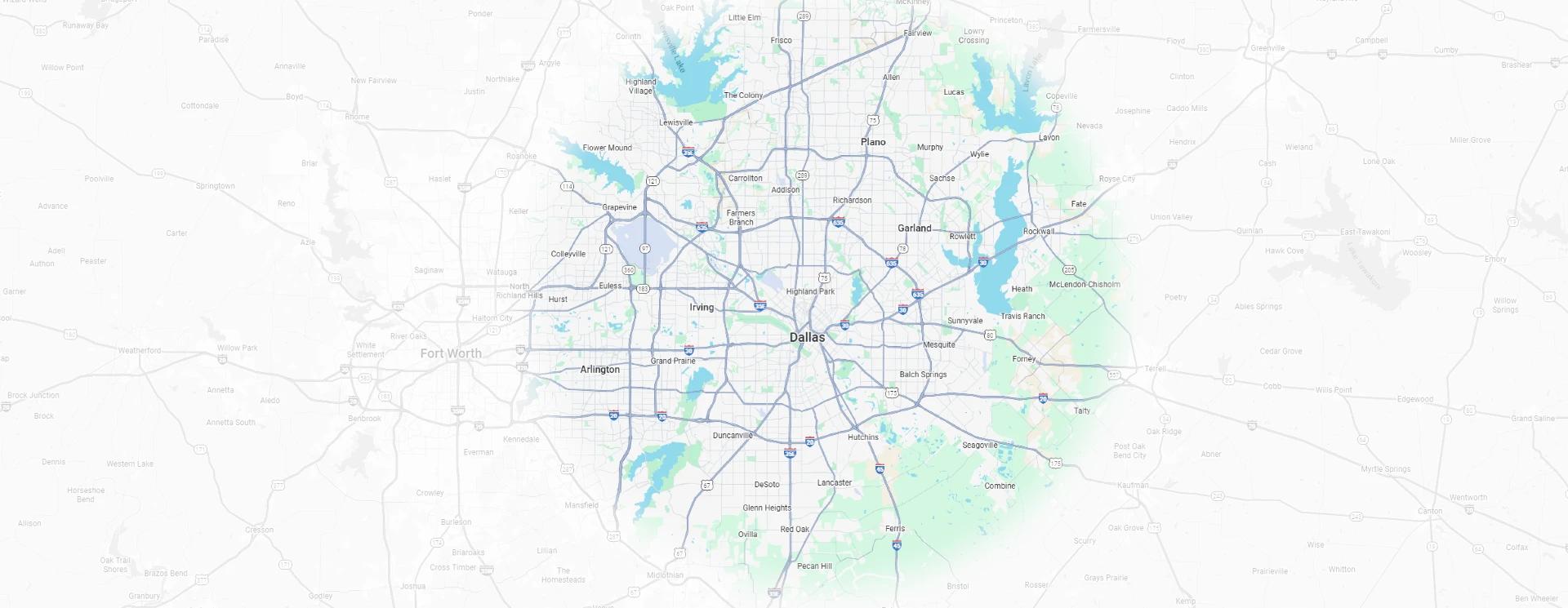
Whole blocks of Preston Hollow and Lakewood came to us three houses at a time. Someone saw the van, asked about it at a mailbox, and booked. That's also why route density matters and why the trip fee is lower in the home cluster. A tight route means less driving between dogs and more time standing next to one.
What would we tell a first time customer?
Three things.
The easiest dogs on our books belong to people who set the next date before we drive off, while the coat still looks that good. Waiting is the thing that turns an easy groom into a hard one.
Tell us the truth about your dog. Anxious, hates their feet touched, bit someone once at a shop. We would much rather know at the door than find out at the tub. We take nervous, shy and difficult dogs all week. Aggressive dogs we're not taking on new right now, and those are better served by a groomer at a veterinary clinic.
And judge us on the same thing we judge ourselves on, which isn't the day of the haircut. It's how the coat feels three weeks later.