

Your groomer just spent an hour with both hands on every inch of your dog. Ears, gums, armpits, between the toes, the skin under the coat you never actually see. That's more of your dog than a vet sees in a routine checkup.
It seems silly to let all of that walk out the door as a cheerful "he did great today." So we write it down.
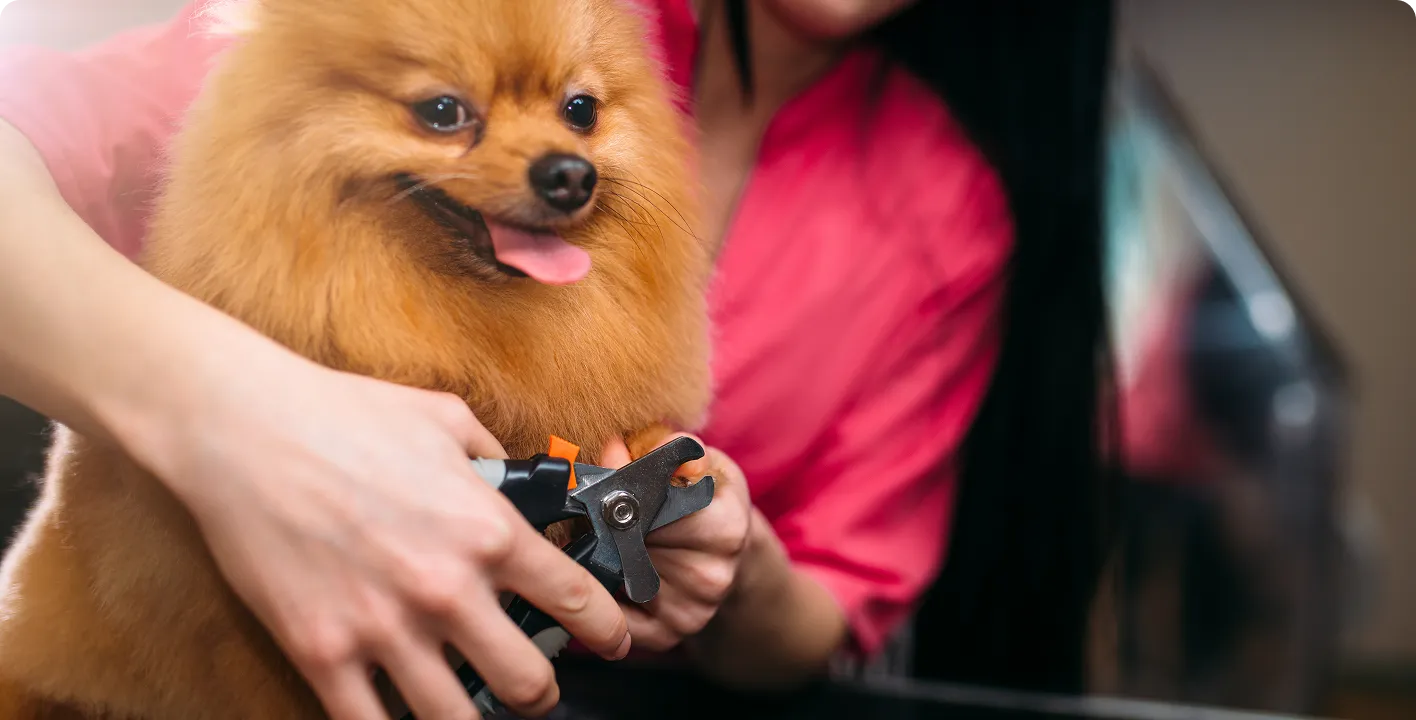
What's on the card?
Six things, every dog, every visit.
Ears. Clean or not. Any smell, redness, discharge, or a dog who flinched when we got near one side.
Eyes. Discharge, cloudiness, staining, hair growing into them.
Teeth. Tartar, gum color, anything broken, breath that has changed since last time.
Nails. How long they were, how far the quick had grown out, and whether we could get all four feet done or had to leave one.
Skin. Lumps, bumps, scabs, hot spots, fleas or flea dirt, dry patches, anything that wasn't there eight weeks ago.
Coat. Where it mats, how bad it was, and what that means for how soon you should book again.
Plus a note on how the appointment went behaviorally, which matters more than people expect for the next visit.
Why write it down instead of just telling me?
Because the doorstep is the worst possible place to receive information.
You're holding a wet excited dog, your phone is going, somebody is calling from inside the house. A groomer says "his back left ear looked a little pink" and it evaporates before you get to the kitchen. Three weeks later the ear is a full infection and nobody connects the two.
Written down, it survives. It goes into your phone, it gets read at the vet's office, and it builds a record. The most useful thing a report card does isn't the single visit. It's the comparison. When the same groomer sees the same dog every 6 weeks in Highland Park and writes it down each time, a lump that has grown is obvious. Nobody is remembering it. It's on paper.
What kind of things do groomers actually catch?
Ear infections, most often. A groomer cleans ears on every single bath, so they're looking into both ears more regularly than anyone else in your dog's life.
Lumps, second. Bathing a dog means running your hands over the whole body under wet flat hair, which is when you find the thing a thick dry coat hides completely.
Then sore paws. Grass seeds and burrs between the toes, cracked pads, a dog who pulls one specific foot back every time. Overgrown nails that have started changing how the dog stands.
Then teeth. Tartar builds slowly enough that owners genuinely don't see it happening. Someone who looks at a hundred sets of teeth a month sees it immediately.
And skin. Flea dirt before you ever see a flea. Hot spots under a mat. Dry patches from too much sun in a Dallas backyard. There's more on the ears, teeth and nails side of it, which is where most of the early findings come from.
Is my groomer diagnosing my dog?
No, and this part matters.
A groomer isn't a veterinarian and should never talk like one. We don't tell you what the lump is. We don't tell you your dog has an ear infection, or what to put in the ear, or whether a tooth needs pulling.
The framing on the card is always the same. We noticed this. Ask your vet.
Sound like your dog? We bring the van to your driveway. No cages, no car rides, same groomer every time.
BOOK A GROOMThat sounds like a small distinction. It's the whole distinction. A groomer who guesses at diagnoses is dangerous in two directions, because they can frighten you about nothing and they can reassure you about something. All we're honestly qualified to say is what our hands found and where it was.
What should I do with the card?
Read it in the kitchen once the dog has stopped shaking water everywhere. Then keep it.
If there's something flagged, take a photo of the note and bring it to your next vet visit, or call sooner if it's an ear or a limp. Vets like this. It gives them a date and a location for something they would otherwise be guessing at.
If the card says the coat is matting behind the ears at 8 weeks, that's not a criticism. It's a scheduling fact. Move to 6 and the problem stops existing.
What if the card says nothing?
Then it says nothing, and that's a good day.
Plenty of cards from Lake Highlands and everywhere else come back with six clean lines and a note that the dog fell asleep on the table. We still write it, because a card full of clean lines is the baseline that makes the one abnormal line six months from now mean something.
It's the same reason we write down how the visit went at all. Nobody remembers eight thousand grooms. Paper does.