
Ask ten owners what their groomer does and they'll describe the haircut. Nobody asks about the dryer. It's the longest step, it's the step with the most risk in it, and it decides whether your dog is actually dry or only dry on top.
Here's the difference in plain terms.
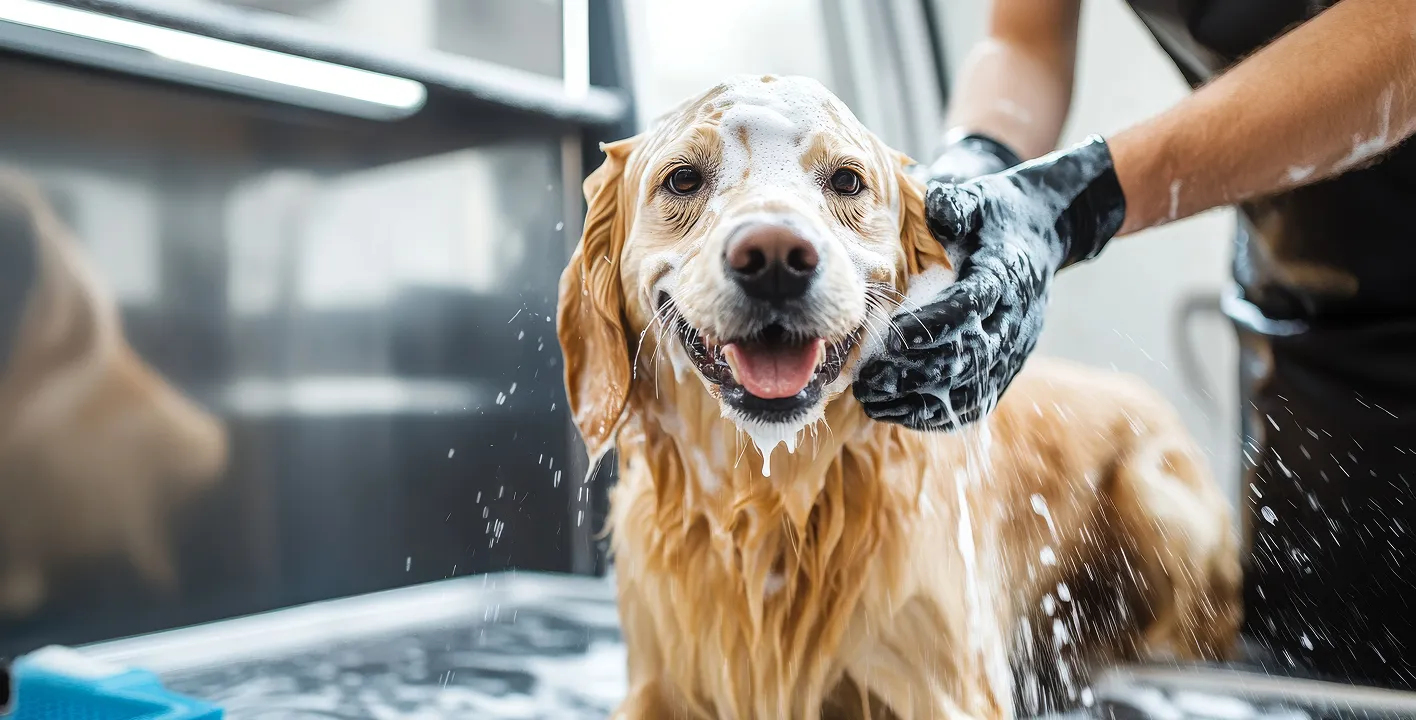
So what's cage drying, exactly?
The dog goes into a kennel or a box with a dryer unit pointed into it. Warm or room temperature air blows. The groomer walks away and starts the next dog. A while later the dog comes out, gets finished, and goes home.
It exists for one reason, and it's not a sinister one. It's arithmetic. A shop with a full book before noon can't stand and hold a dryer on every dog in it. The cage does the drying so the hands are free for the next animal. Plenty of careful shops run no heat at all and check often.
But for all of that time, nobody has hands on the dog.
What does hand drying mean instead?
The groomer stands there with the dryer in one hand and a brush or a comb in the other, and works through the coat section by section while it dries. The air lifts the hair, the brush follows the air, and the coat dries from the skin outward.
That's the whole trick, and it's why it takes as long as it does. A brush moving through wet hair separates it while the water is still leaving. A coat that dries in still air dries stuck to itself. You can dry a doodle in a box and it'll look fine on Tuesday, and on Thursday the owner finds a mat the size of a plum behind the ear that wasn't there before. It was there. It just hadn't tightened yet.
How do I know if my dog went home damp?
Put your hand flat on the dog and press down until you feel skin. Check the chest, the armpits, the base of the tail and behind the ears. Those are the spots that stay wet.
If the surface is fluffy and the skin underneath is cool and a little damp, the dog isn't dry.
A dog that goes home damp underneath does three things over the following week. It starts to smell, because damp skin under a warm coat grows bacteria. It mats faster than it should. And in a bad week it develops a hot spot, which is a raw patch the dog can lick open in a day.
Is cage drying actually dangerous?
The risk isn't the box on its own. It's heat plus nobody watching.
A flat faced dog, a pug or a bulldog or a boxer, overheats fast and quietly. So does an older dog with a heart condition. So does a thick double coat that traps warm air against the skin instead of letting it move. In a Dallas August, everything indoors is already fighting the temperature outside.
We don't cage dry. Not because of a policy we're proud of, but because there's no cage in the van to dry anything in. One dog is in there at a time, so the groomer's hands aren't needed anywhere else. If you want the rest of the layout, there's a walk through of what's inside the van.
Does the dryer change how the haircut looks?
Yes, and this is the part owners feel without being able to name.
Clipper work and scissor work only sit right on hair that's dry, straight and lifted off the skin. Cut into a coat that's still slightly damp at the root and the hair springs as it finishes drying, so the line you cut moves after you leave. Owners describe that as the groom looking great on Saturday and going strange by Wednesday.
Dry the coat properly first and the line stays where it was put. On a curly coat the difference is obvious. On a smooth coat you mostly notice it as shine.
Sound like your dog? We bring the van to your driveway. No cages, no car rides, same groomer every time.
BOOK A GROOMWhat about double coats and shedding season?
This is where the dryer stops being about comfort and becomes the main tool.
A high velocity dryer worked through a double coat pushes dead undercoat out in sheets. You can't brush that much coat out of a husky, a shepherd or a golden. There's not enough time in a day and the dog would hate every minute. You have to move air through it, right down to the skin, and brush behind the air as it comes.
That's what a spring or autumn de-shed in North Dallas mostly is. Dryer work, with a brush following. If you're heading into the season where your black pants become a losing battle, there's more on what shedding season does to a Dallas house.
All of which comes down to one question worth asking whoever grooms your dog. Do you hand dry, or do you cage dry?
There's no single right answer for every dog, and there are good groomers on both sides of it. But you deserve to know which one your dog got, especially if your dog is old, flat faced, heavy coated, or the sort who can't settle in a strange box on their own.
You paid for a dry dog. It's fair to want to know how they got there.