

When is a puppy old enough for a first groom?
Your puppy came home with a coat like a duckling. Now there's a wave coming in behind the ears and something is definitely happening on the back legs.
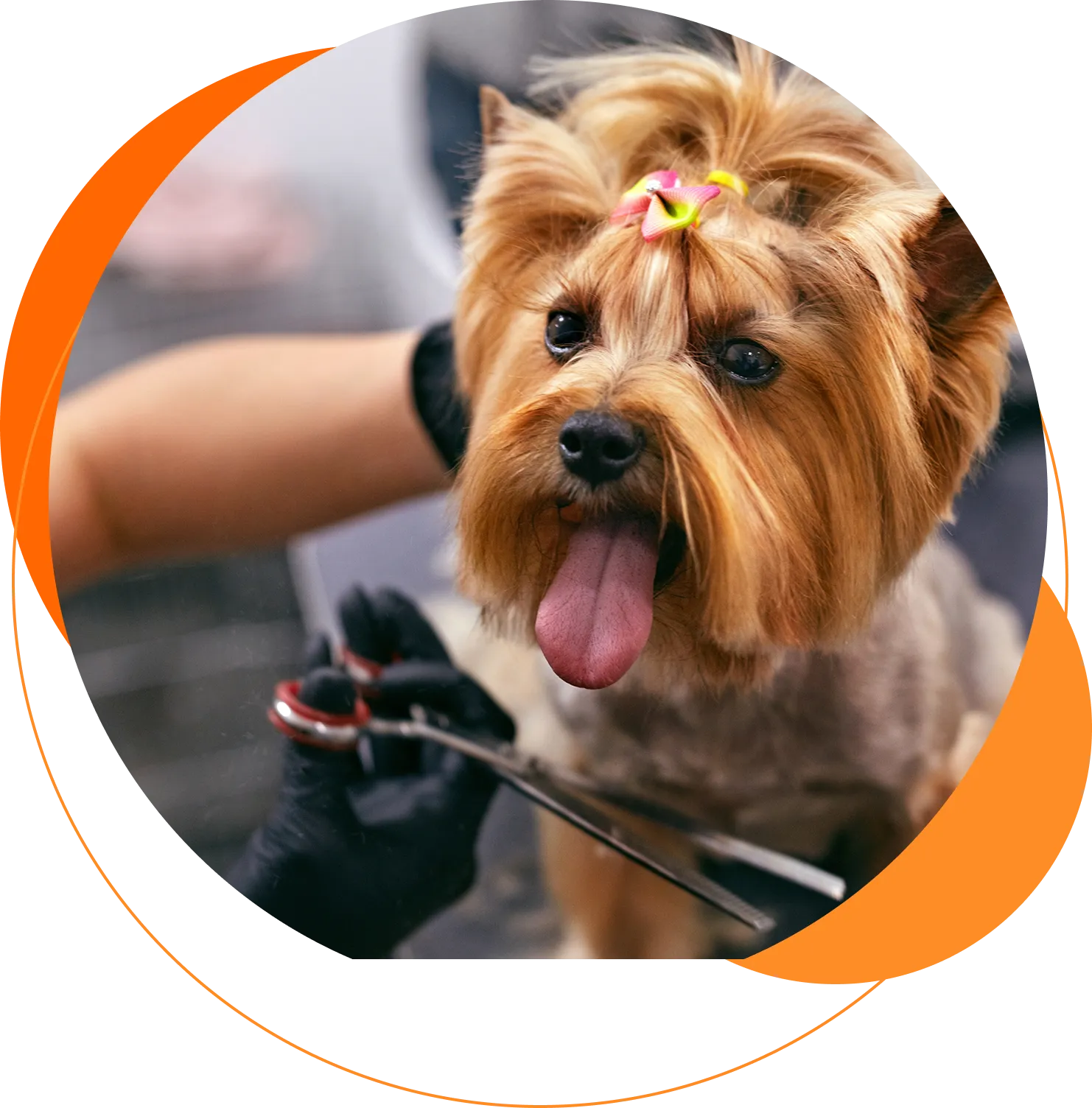
Earlier than most people do it, is the honest answer. Ask your vet where you are on vaccinations and work from that. The principle is that the first appointment should happen before the coat actually needs it.
Because the first groom isn't really a haircut. It's a lesson. Water on the back, the noise of a dryer, somebody holding a paw and touching between the toes, a clipper buzzing near the face. A puppy who learns all of that while there's nothing urgent to fix learns it calmly. A puppy whose first appointment is also his first matted coat learns something very different, and you'll both be paying for that lesson for years. There's more on how those first visits run in your puppy's first grooming appointment.
Why does November get tight?
Because everybody wants the same two weeks. Photos, family arriving, a dog who's going to be underfoot in a full house. The run up to the holidays fills from both ends and the flexible slots go first.
November has a quieter stretch before that starts. It's also better timing on the coat itself. Fur that's had a week or two to soften after a groom photographs better than fur cut the day before, which reads as scalped under a flash. Groom too early and the shape has grown out. Somewhere in the middle is the sweet spot, and in November you can still pick your day rather than take what's left.
What actually happens at a first appointment?
The van pulls into your driveway and your puppy is the only dog in it. No cages, no waiting room, no barking from a room she can't see. For a first timer that matters more than anything else about the setup.
A typical appointment is about an hour, and many are done inside ninety minutes. Compare that to a salon trip, which is commonly four hours door to door, and dogs can wait six hours from drop off to pick up. For a young puppy, that's a very long first impression of what grooming is.
Every bath includes the wash, the blow out, a nail trim, ear cleaning and a finishing spritz. A full groom adds the haircut, breed standard or whatever you'd rather have. On a first visit we'll often keep the trim modest and go slowly instead of chasing a perfect finish, because a puppy who has a good hour is worth more than a flawless haircut.
Will she be frightened?
Some of it, probably, for the first few minutes. The dryer is the usual culprit. Water on the face is the other one.
What helps is slowing down. Letting her stand on the table and get bored before anything starts. Dryer on low and pointed away until the noise is just noise. Handling the feet early so it isn't a surprise later. All of that is easier when there's one dog and one groomer in a small quiet space with nothing else competing for her attention.
You'll get a puppy back who's tired. That's normal, and it's a good sign. It's a lot of new information for one morning.
What if I want a specific look for the photos?
Say so plainly, and say it in dog terms if you can. Length on the body, length on the legs, what you want the face to do. Photos of cuts you like, and cuts you hate, are worth more than any description either of us could write.
Sound like your dog? We bring the van to your driveway. No cages, no car rides, same groomer every time.
BOOK A GROOMBe honest with yourself about upkeep too. A long teddy bear face is lovely and it needs combing every couple of days, especially through a wet winter. A puppy coat also changes into an adult coat, and the same haircut sits differently once that happens, sometimes quite suddenly. Your groomer can tell you which of the two you're currently looking at.
Puppies in Highland Park and University Park tend to be doodles and small curly mixes, and those are the coats where the gap between the photo and the maintenance is widest. Better to hear that before the cut than after.
What if my puppy is nervous or hates being handled?
Tell us before the appointment rather than during it. Wriggly, shy, shouty, bites at the brush, hates having her feet touched, all of that is ordinary puppy behaviour and it's far easier to work with when it isn't a surprise.
We take nervous, shy and difficult dogs, and a good deal of the job is simply going slower than the schedule would like. If a dog is genuinely aggressive rather than frightened, that's a different situation, and the right place for her is a vet groomer who can work with sedation on hand. We're not taking on new aggressive dogs at the moment, and saying that up front is fairer than discovering it in a driveway.
The first groom sets the tone for every groom after it. Get it done while it's easy and there's nothing to fix, and you've handed your dog a skill instead of a bad memory.