

Somewhere in your phone there's a text that starts with "so, we had a bit of a problem today."
Maybe he snapped at the dryer. Maybe nobody could touch his back feet. Maybe you got the polite version, which is that he'd do better somewhere with more one on one attention, and you understood exactly what that meant.
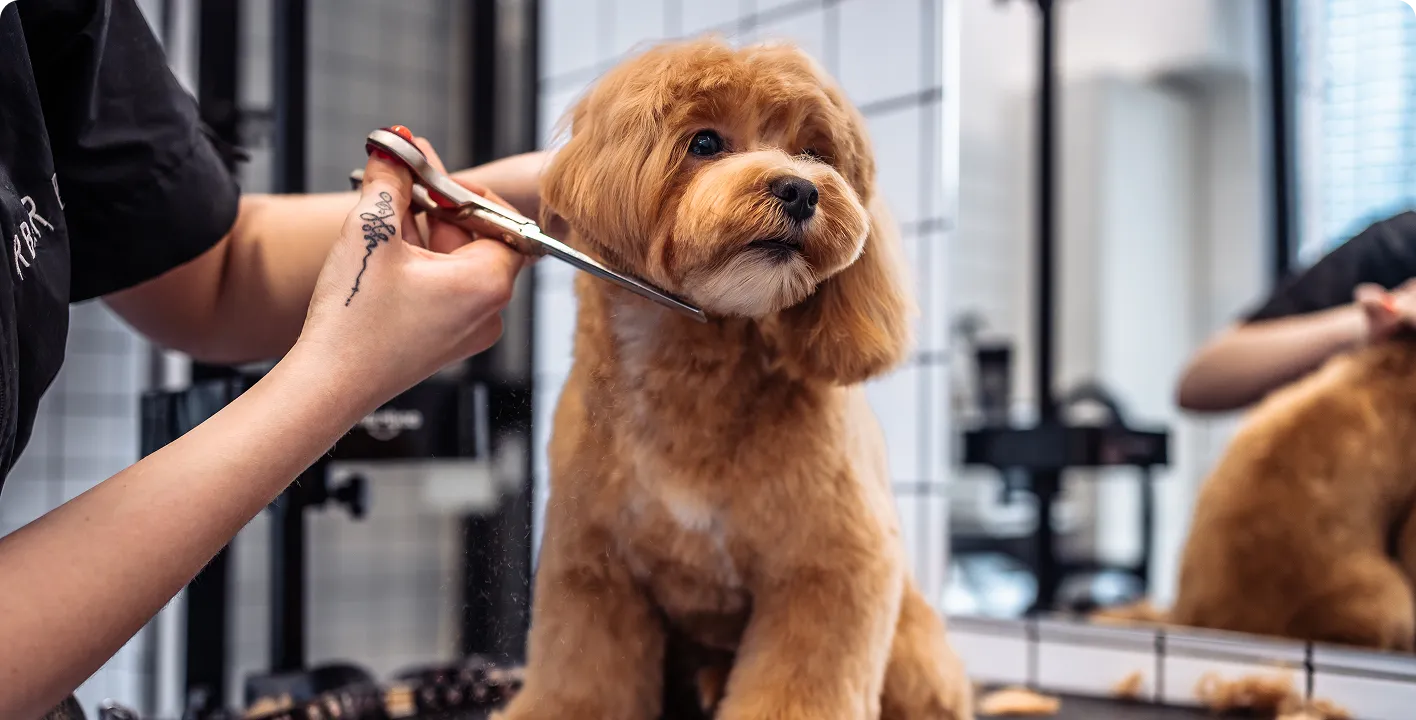
Which part does he actually hate?
This is the question worth answering first, and almost nobody gets asked it.
Grooming isn't one thing. It's about nine things stacked on top of each other: the car, the strange building, the other dogs, the crate, the wait, the bath, the dryer, the nails, and the clippers around his face. A dog who hates the groomer almost never hates all nine. He hates one or two. The trouble is that by the time anyone reaches the ones he hates, he has already sat through the first five feeling terrible.
So ask the last shop which specific step went wrong. If they say he was fine right up until the dryer, that's genuinely useful information. If they say he was shaking from the moment he came through the door, that's a different problem, and honestly an easier one.
Because the first five items on that list are the building, not the grooming.
What if the problem is the building?
Then it's mostly solvable, and it's solvable by removing the building.
A salon trip is commonly four hours door to door and a dog can wait six. A mobile appointment runs about an hour, and many finish inside 90 minutes. One dog in the van at a time, no cages, no other dogs in earshot, one person doing the whole groom from wash to finish rather than a handoff between a bather, a dryer and a stylist he's never met.
Take the drive, the kennel and the waiting away and a fair number of dogs turn out to have no objection to the actual grooming at all. Not every dog. But we've had a lot of first appointments where the owner stands there slightly stunned because the dog they were apologising for in advance just stood there and let it happen. There's more on why anxious dogs do better in the van if that sounds like yours.
What if it's his feet?
Feet are the single most common specific complaint, and they're their own animal.
A dog who is fine for everything and then loses it at the nails usually has a reason. He got quicked once and it bled and it hurt. Or nobody ever handled his paws when he was a puppy, so at four years old a stranger grabbing a foot feels like being grabbed. Or he's older and his hips don't like the weight shift when one leg comes up.
What helps: doing a few nails rather than all of them, taking a break, coming back. Doing the fronts this visit and the backs next visit. Trimming more often so less comes off each time, which is less of an event and less risk of hitting the quick. And at home, when nothing is happening, sitting next to him and holding a paw for two seconds, then letting go before he pulls away. Two seconds. Not a training session, just a hundred boring repetitions over a month.
You do not have to fix this yourself, though. Say "he hates his feet" at the van door and it changes how the whole hour is ordered.
What if it's the dryer or the clippers?
The high velocity dryer is loud and it's air blowing where air doesn't normally blow. Plenty of dogs hate it and there is no lecture coming about that.
There are ways around it. A lower setting takes longer but it's tolerable. Towel drying more first means less time under the dryer. Keeping the noise away from his head and his ears, which is where most dogs object, solves it for a lot of them. Same story with clippers around the face: a smaller quieter clipper, scissors instead, or simply accepting that his muzzle gets tidied rather than shaped.
None of that works in a room where six dogs are booked behind yours. It works fine when he's the only dog in the van.
We send a note after every visit saying how it went and what he found hard, so the next groom starts from real information instead of hoping.
What can I do between visits?
Sound like your dog? We bring the van to your driveway. No cages, no car rides, same groomer every time.
BOOK A GROOMLess than you fear, and mostly it's brushing.
The biggest favour you can do a dog who dislikes grooming is not let him get matted. Matting turns a pleasant hour into a long uncomfortable one, and a dog who has had two rough de-matting sessions learns exactly what he thinks about grooming. Smooth coats want a bath every 8 to 12 weeks. Standard and curly coats every 4 to 6. Double coats want seasonal de-sheds in spring and autumn.
Short cycles are also cheaper to keep up. A recurring schedule of every 2, 4 or 8 weeks is $15 off every visit, permanently, and rebooking on the day of the groom is $7 off the next one. We run this across University Park, Lakewood and the rest of our map.
What if he has actually bitten someone?
Then here's the honest version, and it isn't a judgement on him.
Anxious, shy, growly, squirmy, shut down, turned away by a chain store: we take those dogs, and we've taken them since 2017. Difficult is fine. Difficult is most of a Tuesday.
Truly aggressive is different. If he's bitten hard enough to break skin, or he goes at people with real intent, we aren't accepting new aggressive dogs right now. The right answer for that dog is a veterinary groomer who can sedate him safely with a vet on site. That's a calmer, safer day for him and for everybody else, and pretending otherwise would just get somebody hurt.
If you're unsure where he lands, describe what actually happened rather than what you fear it means. Most of the dogs owners describe as aggressive turn out to be scared dogs who ran out of ways to say no, and scared is something we know what to do with.